What, another post about Pear Essence? Yes, that’s right. This flower essence could be considered the most important of our 20. Though it may be argued that whichever essence you need at the time is the most important! While I’ve talked about many components of Pear Essence in other blogs, this is the first time we’ll focus on the color of its blossoms: pure white, pristine white, white-white. Read on . . .
 Bill and Joe were driving back from town last week. The moonless black night sky hovered over the freeway, preventing Bill from seeing the stalled semi-truck in the lane ahead. No flashing emergency lights, or lights of any kind, gave them warning. The car rammed into the huge truck at nearly 50 mph, much like hitting a brick wall.
For both men to walk away from this accident was nothing short of a miracle. Bill’s airbag functioned. Joe’s did not and unfortunately his seatbelt did little to neutralize the collision. Bill suffered a bruised ankle and shoulder. Joe suffered several damaged vertebrae as well as a broken clavicle and a few ribs.
The impact deployed the airbag feature – as well as their limbic systems. Bill and Joe’s fight or flight instincts charged into action. Shifting into survival mode ensured that they would pull through this crisis.
The limbic system is summarized in the wisdom of biofeedback pioneer Dr. Jeffrey Cram, as documented in The Essential Flower Essence Handbook: “We are ‘internally wired’ in such a way that if, for example, a saber-toothed tiger were to come charging toward us, the blood in our skin would be shunted away from the skin and into the muscles to make us stronger. If we tore our skin while fighting the tiger, we wouldn’t bleed as much due to this protective, or survival, response.”
Similarly, the car crash that caught Bill and Joe unawares parallels the sudden attack of a tiger. These are the circumstances that respond particularly well to the message of Pear Essence. It wordlessly says, “It’s okay. Everything’s going to be fine.” Even if a longer healing must ensue as for Joe, this flower essence “bathes us in a waterfall of peace.”

White happens to be the exact opposite of the color of the sky on the evening of Bill and Jo’s accident. The color of peace, as noted in the petals of the pear tree’s blossoms, is white. It is the absence of color. In fact it’s considered to be a shade rather than a color. It’s also an amalgam of all the colors of the spectrum. In this sense, while containing everything (all our conflicts and tensions), it appears to be the absence of everything (resolution and relaxation). What a metaphysical conundrum!

While apple blossoms are often shaded with a pinkish blush and blackberry blossoms can be ornamented with a pale lavender, the petals of the pear blossom are pure white. The color itself is visually pacifying. It symbolizes purity, serenity, and stillness. The blossom of the pear – growing in clusters much as friends might group together to support each other – symbolizes hope and friendship.
We could say energetically, that conflict sounds “loud.” It clashes; it’s discordant, disharmonious, warlike. Contrarily, Pear Essence embodies the absence of any conflict amidst the resolution of all strife. It is “the sound of silence.”

To summarize, Pear Essence can offer comfort in times of sudden and accelerated emergencies. It’s been said that the eyes are the windows of the soul. Likewise a hundredfold for flowers as the doorway into the soul of plants and trees.
When we gaze into the soul of flowers – their blossoms especially – we see through that window into their very essence.
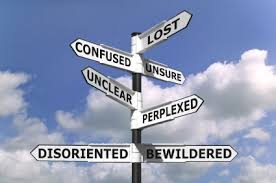 We’re living in challenging times. Anxiety, loneliness, isolation, stress: which of these states are you facing?
 The water temperature at the Yuba River North Fork hovered at 40 degrees. I didn’t care. A wetsuit, I surmised, would surely make it swim-able. I didn’t care. I swam until I couldn’t feel my fingers and toes. For about 15 seconds. At that point, I began to care.


 Who knew that our lives would be thrown into such chaos and uncertainty in only a few months’ time? Who knew how much energy would be expended for daily tasks we once performed so quickly and easily, like shopping, running errands, etc.? Meanwhile we’re watching our country’s economy careen like a roller coaster off its tracks. Who knew that quarantine could have such a kickback for people’s emotional natures, or that going unmasked amidst spiking virus number might restore their sense of independence and freedom, if only symbolically, qualities that are especially important to the natural temperament of Americans?
 “Humility can sometimes be confused with low self-esteem, low confidence or meekness,” reported 3 professors at the University of Michigan – Toni Antonucci, Kristine Ajrouch, and Noah Webster. “But researchers have come to realize that being humble generally indicates the presence of deeply admirable personal qualities. It means you have the ability to accurately assess your deficiencies without denying your skills and strengths.”
 Never in our lifetime have we faced the challenges of masking, distancing, quarantine, and lockdown.
 The heart chakra is divided into 2 sections: upper and lower. The lower part stores our emotions, as the heart chakra is the pivotal point that connects the 3 lower and the 3 higher chakras. Here, the heart’s energies are subject to a downward pull by those 3 lower chakras; hence the possible sense of agitation. The higher part of the heart chakra is the pure feeling center where our life force is drawn upward toward the 3 higher chakras.
 One woman in the U.K., a medical secretary, wrote of


 There’s yet another flower essence to add to the grouping of the 4 presented in
 In the introduction to my spiritual memoir,
  About 6pm that evening, Snowy came to me and we connected and communicated. I felt like she was asking me how much time I could spend with her in the next month. I explained my schedule to the best of my knowledge and let her know my availability. I sensed she needed to know if I was ready to let her go. She seemed ready to move on. Though I felt she was willing to stay around longer if I needed her.
 At 4:30 this afternoon, my son and I took her to the animal clinic. They helped her move on. We completed her life outside under a tree she seemed drawn to, and she behaved as though she was very much at peace.
 To answer your question: yes, please stay on this program exactly as it is. It was designed for you, either with her staying in this world or leaving it.
  “I do have one question, please? When giving out these dosage bottles to various friends and family is it best that they say the affirmation when taking their flower essences? I have a friend who is a complete perfectionist. I feel the affirmations may get her caught up in trying to do it right or something? I’d wondered if she might do better to focus more on the inner shifts that were happening rather than the affirmations, but I may be incorrect with this thinking. Your advice would be welcome.
 Another point is, yes, there’s the possibility for this woman that adding affirmations to the mix might veer her off course. But to not suggest them to her removes that opportunity. The chance that they might provide her with significant help is very strong.
 “I recently used the Flower Essences to assist me with a deep sorrow I was feeling at the loss of my dear cat and companion Princess. After her passing, she has been coming to visit me at night, and I have felt her on the bed at my feet or near my legs. That seemed to bring me some comfort, as I could sense she was with me.
 “But one night, she rested right beside me, just like when she was here in 3 dimensions. It was so real to me that, in a semi-awake state with my eyes still closed, I felt her beside me. I did what I always did when she joined me in the middle of the night – I reached out to give her a cuddle.
 “I decided to use the flowers to help me. I chose
  “Slowly I began to notice that my days and nights were filled with greater levels of gratitude and appreciation. I haven’t exactly broken out laughing but I feel better, even though I still feel and miss Princess’s presence. Also I notice the things that are not as they were. I feel Princess is trying to assist me in figuring out how to be with her outside this dimension – but I am not there quite yet.”
 Jeanine used to love singing in the choir. Her alto voice was as strong as ever and Rob – the choir director and also a fine bass – lead the group with an ear for pitch, blend, and rhythm.
 “Would you feel better if you’d been apologized to in both situations,” I asked her one evening as we sat watching the sunset over the western ridge.
 It’s important that we learn to esteem ourselves, especially if a lifelong habit of doing just the opposite is a part of our character resume.
 U.S. President Harry Truman coined the phrase, “the buck stops here.” By this, he meant that all presidential decisions, and the responsibility for them, were ultimately his.
 “May you live in interesting times.” This well-known Chinese prophecy can be taken as either a curse or a blessing, depending on how you look at it. Yet its origin/author remains unknown, and the Chinese themselves seem to know nothing about it. One online source traces the aphorism to the ominous statement that “We move from one crisis to another. We suffer one disturbance and shock after another.”
 After running a few errands, I went for a swim at the health club – gratefully a mostly-salt-water pool, with less chlorine than most pools. The water, for me, is a welcome sanctuary – a place that’s safe, healing, and restorative. As was often the case, swimmers had to double up in their lanes. I chose a middle lane with a woman whose hands disappeared with notable grace into the water on her crawl strokes.
 In the timeless tale of the “Battle of Kurukshetra,” as described in India’s ancient scripture, the Bhagavad-Gita, Krishna serves as the charioteer of his beloved disciple Arjuna. He counsels, “Oh, Arjuna, be thou a yogi.” What more perfect advice is there to give the warrior facing an opposing army of thousands of soldiers armed for battle!
 Liz came for a consult just yesterday. An attractive woman, she arrived at my office, dressed for the business world, her makeup and jewelry as flawless as her skin. Liz admitted that she harbored a mixture of anger, grief, and resentment that, as the director of a team of 30 co-workers in a prestigious Chicago marketing firm—everyone had been let go without warning. She and each of her colleagues—well-educated, talented in their professions, and all-round good people—felt blindsided. The dismissal, as they perceived it, seemed unjust and undeserved. What had they done to receive such treatment, they asked each other in stunned incredulity.